No wonder Bangladesh is experiencing rapid economic growth, offering opportunities for business in different sectors. However, with this rapid growth, Bangladesh is facing real HR challenges that can affect its long-term success. From an HR standpoint, poor HR practices are not only reducing productivity but also limiting competitiveness in both local and global markets.
For this reason, companies have to take a strategic approach that can ensure HR practice serves as a driver of growth and success. Here, understanding the HR challenges and issues in Bangladesh helps to understand the underlying problems and create the most effective strategies in this regard.
Top 20 Common HR Challenges and Issues in Bangladesh With Solutions
The biggest challenge of maintaining a global presence is to understand the HR needs in a certain region where the workforce is located. All these could be bundled with cultural differences and language barriers, which makes the current human resource issues even more challenging.
Regardless, the core principles of HR still apply to most companies around the world while addressing the following HR issues:
01. Emphasizing on Employee’s Mental Health and Overall Wellbeing
The COVID-19 pandemic has intensified the challenges of maintaining employee wellbeing. The Daily Start mentioned that untreated mental health issues cost the global economy over $1 trillion annually. Local evidence shows that integration of mental health into workplace policies is slowly growing. However, it is still at a very early stage.
Here, one of the major challenges is the gap between the laws and policies. The Labour Law of Bangladesh does not explicitly cover mental health. But The Business Standard mentions that 16.4% of Bangladeshi adults experience mental health difficulties according to a WHO survey. On top of that, Bangladeshi employees in many workplaces hesitate to seek help for mental well-being due to fear of judgment.
Issues
- Lack of productivity and motivation among employees, leading to inefficient output.
- Potential burnout, which results in suboptimal results.
- Mental health problems of employees affect overall company performance.
Solutions
- Emphasis on wellness culture should be from the top, making it a vital part of the company’s overall work culture.
- Make stress management a priority, and teach employees practical skills to better manage their deadlines and workload.
- Make regular mental health awareness toolkits and campaigns so that leaders and members alike are always cognizant of their mental health.
02. Creating a Sense of Accountability as a Core Part the Workplace Environment
The first step toward creating a productive workforce is to create a self-accountable culture inside the workspace. This action ties everyone working in a workplace into being accountable for their actions, decisions, and results.When the employee understands that their choices have a direct role in the results, they are more likely to make effective decisions. Ultimately, it enhances employee performance and helps create a highly productive workforce.
Issues
- Lack of effective action among leaders leads to incomplete or suboptimal projects.
- Eroded trust in managers, leaders and colleagues, which results in dysfunctional dynamics within the company.
- Declining engagement among employees results in a lack of productivity and a loss of efficient output.
Solutions
- Create two-way feedback mechanisms to ensure all team members, project managers, and leaders are holding each other accountable for their actions.
- Facilitate transparency and evaluation so that everyone in the company is fairly evaluated and rewarded accordingly for their contribution.
03. Adapting to a Hybrid Work Model
Hybrid work models enhance employee satisfaction and productivity. However, implementing the work model locally in Bangladesh presents challenges to the HR leaders. First comes the infrastructure and technology.
In Bangladesh, companies often face limited access to digital tools, especially outside the major cities. It makes the effective hybrid work implementation difficult. Moreover, the HR team often faces complexity in the management and performance evaluation of a hybrid workforce. In some cases, it raises concerns about accountability.
Issues
- Lack of employee satisfaction stemming from an inflexible schedule leads to lapses in productivity and an apathetic attitude towards work.
- Declining flexibility and productivity means that those employees will not be putting all their effort into their work, marking a huge loss for the company.
- Resistance to change is a huge problem for employees who are used to the offline model of work and are unwilling to switch to a hybrid environment.
Solutions
- The development of virtual learning environments will allow employees to meet deadlines and complete their tasks online.
- Implement clear policies for hybrid arrangements so that no one is working overtime, and everyone can maintain a clear, balanced schedule.
- Make incremental changes so that there isn’t a sudden whiplash for employees who are resistant to change.
04. Securing the Talent Recruitment War
Bangladesh is rapidly growing in its economy and has an increasing demand for skilled labor. However, talent recruitment is a big challenge for the HR teams of Bangladesh. In some cases, where the candidate’s qualifications do match the requirements of the company, the data-driven recruitment process is inefficient. It leads to delays and mismatches. Moreover, the competition for skilled workers is very high. Many companies try to hire the same top talent. Thus, it becomes harder for HR to attract and retain a skilled workforce.
Issues
- Securing the right, qualified person for the job is a tall order, especially when so much of the hiring process is done manually.
- Data-driven recruitment can be inaccurate due to the collection and manual processing of data.
- Recruiting efficiently is difficult due to evaluation and communication all being manual.
Solutions
- Diversify recruitment strategies by coopting social media, posting on career sites, going to job fairs, etc.
- Automate the hiring process by using software wherever possible to reduce the manual workload.
- Train hiring teams so that they can secure the best person for the job.
05. Creating a High Performing Workforce
The rise of hybrid and remote work models has added further complexities in performance monitoring and employee engagement. McKinsey research indicates that approximately one-third of employees experience burnout. Here, the highest rates among remote workers are about 36%. Second is in-house workers by 35% and hybrid workers by 28%.
To focus more on the point, there is no proven methodology or framework that can be used to boost the productivity of the employees working onsite and offsite. This makes it confusing for the HR leaders to make the most efficient decision to motivate their employees and keep their productivity rate at an optimum level.
Issues
- Low productivity can occur if employees are pushed to their breaking point while trying to create a high-performing team.
- No specific proven methodology or framework to complete specific tasks will lead to employees being uncertain about company goals.
- A high rate of demotivation can arise due to a highly competitive work environment.
Solutions
- Promote a healthy work-life balance for everyone in the company so that overall morale remains high.
- Employ integration and socialization activities so that everyone gets to know each other better, and there is high engagement among team members.
- Provide feedback, and recognition and implement a reward system so that employees are incentivized to work harder and meet their targets.
06. Using Automation to Perform the Routine Tasks
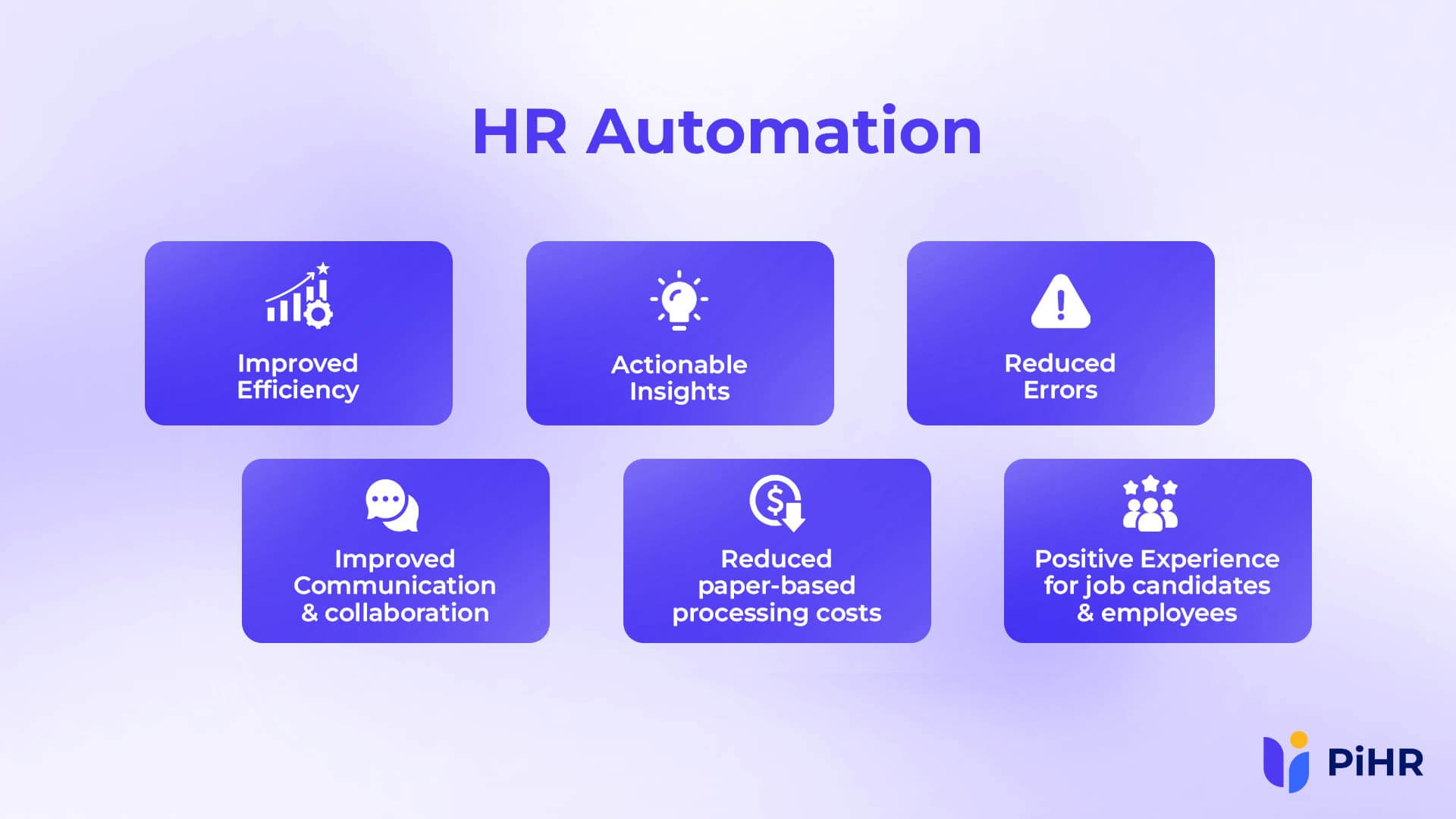
For the HR professionals in Bangladesh, automation to perform routine tasks has offered both opportunities and challenges.
A 2021 study of ResearchGate shows that integrating Artificial Intelligence into HR processes can enhance employee performance and reduce turnover. However, HRM AI practices are facing obstacles due to weak infrastructure, low funding, untrained staff, and a lack of policy support.
Moreover, automation must need to follow the legal and ethical rules. Automated systems used for tracking work hours, leave, or payroll are required to adhere to local rules around working hours, overtime pay, privacy, and data protection to ensure compliance.
Issues
- Complexities with integration arise when the automation software does not work with the existing operating system of the company.
- Employee resistance to automation stems from employees not wanting the work environment to change.
- Some tasks cannot be automated.
Solutions
- Using the right accounting software will eliminate most of these issues.
- Providing training for employees will help ease them into the new automated system.
- Optimizing tasks that cannot be automated is the best solution to ensure no one is doing mundane tasks, which will result in a lack of motivation.
07. Being Acquainted With Knowledge of People Analytics
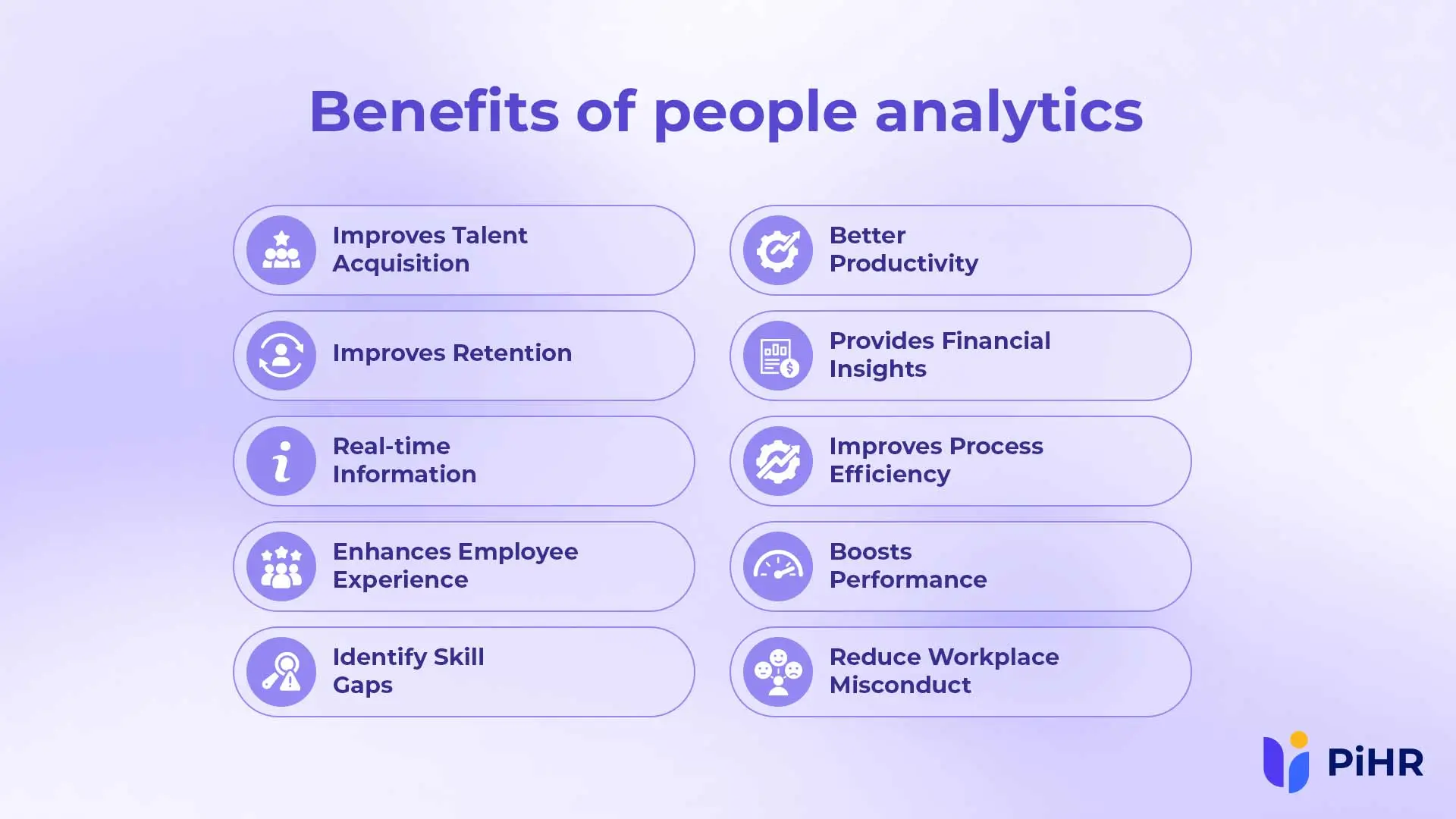
Being able to make informed decisions is one of the best ways to create an accountable working environment. Using a data-driven decision-making policy backed by People Analytics, HR can create a decision-making system based on pure information.
Up and until now, corporations have relied on experience, intuition, team collaboration, and mutual understanding in making important decisions. However, with the inclusion of people analytics, the HR teams feel confident about taking effective decisions. However, it leaves the challenge of training the HR teams in analytics, strategy formulation, and generating outcomes.
Issues
- Lack of training of HR in analytics results in inefficient people analytics.
- Gaining meaningful insights using data analytics can sometimes be difficult, because of the uncertainty of that data.
- Uncertainty with data management results in untrustworthy data generation.
Solutions
- Using the correct visualization tools and database technologies will make people analytics a breeze for everyone involved.
- Training HR personnel will ensure that the data is not breached, is trustworthy, and there is no uncertainty in the data.
08. Authorizing the Use of a Universal Cloud-Based HR Application
In Bangladesh, the adoption of cloud-based Human Resource Information Systems (HRIS) is gradually increasing. Now every HR employee must know the use of HR and payroll software for employee management. This can be done efficiently using a unified platform rather than relying on multiple dispersed apps. Beyond streamlining processes, organizations also experience the benefits of HR software, such as improved communication between teams, reduced information gaps, and better decision-making through centralized data.
Issues
- Performance Challenges occur when the software isn’t properly integrated with the rest of the system.
- There can be security concerns with the software.
- Many workers display a lack of knowledge when it comes to operating cloud-based software.
Solutions
- Implement robust security measures so that there are no chances of data breaches occurring.
- Train personnel in using the software.
- Maintain detailed documentation for integration for seamless integration.
09. Discussing Ideas on Positive Change and Compatibility
HR professionals face challenges in discussing ideas on positive change and compatibility, as often employees in Bangladesh are resistant to change. That’s especially true when moving from the traditional ways of working to HR practices.
On top of that, too many changes in a short time can lead to fatigue and frustration among employees. This “change fatigue” causes the employees to lose motivation and resist new organizational changes.
Issues
- Productivity Lapses can occur if workers need to get used to these minute positive changes.
- Changes to the workflow can completely disrupt workflow for employees who aren’t used to it.
- Studies have shown that workers face high levels of stress when small changes are made to their work.
Solutions
- HRM should develop a comprehensive framework for change implementation.
- Make incremental changes to ensure that employees have time to get accustomed to the little changes.
10. Achieving a Measurable DEI Progress
Diversity, Equity, and Inclusion (DEI) is recognized as a strategic priority by the HR teams in Bangladesh. However, translating these priorities into an effective outcome is not an easy feat.
One of the major barriers to the implementation of DEI in Bangladesh is the lack of regulatory and legal infrastructure that will allow its credibility. It cannot be left to employers alone to create a safe environment for vulnerable employees. Thus, systemic support and enforcement are essential for meaningful progress. In spite of these challenges, organizations in Bangladesh are implementing DEI and reporting positive results.
Issues
- Employees are often resistant to change and are hesitant to co-opt DEI initiatives.
- There are limited data and metrics that can properly measure DEI.
Solutions
- Appoint dedicated DEI leaders who can facilitate these initiatives easily.
- Prioritize DEI as part of the company’s strategy so that workers slowly get accustomed to it.
11. Legal and Compliance Challenges
Maintaining HR compliance is one of the main tasks of a company. You must ensure that your employers are not facing legal and ethical issues at work. You need to make sure your employees are not facing harassment, not just at the workplace but also during hiring, discrimination, or other ethical concerns at the workplace. The legal team needs to be well-equipped to deal with situations if they arise and to make sure people are held accountable for their actions. Not to mention, there are other legal concerns regarding safety issues, risk management, and understanding medical coverage requirements.
Issues
- Security issues can arise from the different software being used, lack of passwords, a highly collaborative work environment, and even lack of privacy due to digital surveillance.
- Risk management is an important thing to note because the safety of workers is the most important thing in a company.
- Avoiding discrimination is important, not just at the workplace, but also during hiring practices to make sure the hiring process is fair and just.
Solutions
- You should employ secure Accounting Software where all the data is encrypted and password protected.
- There should be clear policies regarding legal and compliance issues.
- A company should always train personnel in risk management and fair hiring policies.
12. Employee Retention
While it is essential to know how to hire employees efficiently, the workers who have already been hired are equally important. The employees that you retain play a crucial role in boosting the company. There are several key factors where employee retention plays a positive factor. A good employee retention ratio results in increased productivity, greater customer satisfaction, improved company culture, reduced training costs, and greater revenue.
Retained employees don’t need retraining usually, they have more experience working with the company and know how to navigate rules within the company well. Not to mention, having a large part of the workforce who are experts helps improve the company culture.
Issues
- Hiring the wrong candidate can result from inefficient or manual hiring practices.
- Lack of employee rewards and recognition means that employees often get demotivated.
Solutions
- Making employee rewards an established part of the work culture will keep workers highly engaged.
- Better hiring practices will ensure the right person is hired for the right role.
- Making health and wellness in the workplace a priority will make all workers feel motivated and less stressed.
13. Performance Management Challenges
Performance management is an important tool that can help managers monitor their employees’ performance. It can also help to evaluate their work. The goal of performance management is to ensure that the work environment is positive, and reinforcers their productivity. This is important to foster an environment where people want to perform to the best of their abilities and can stay in line with the company’s goals.
Performance management boosts employee performance, increases employee retention, helps calculate employee productivity, recognizes achievements, and aids in defining career paths for employees.
Issues
- The lack of clear strategies makes workers demotivated.
- A lack of communication and isolation from the rest of the company often leads to poor performance and weak collaboration.
- Ineffective goal setting results from ineffective leadership.
Solutions
- Make sure team leaders and project managers have defined and measurable goals and outcomes.
- Monitor performance effectively to ensure all workers are engaged and highly motivated.
- Establish a feedback loop to hold everyone accountable.
- Use collaborative tools to foster better communication and collaboration within the company.
14. Training and Development
In Bangladesh, HR teams often struggle to implement effective training and development programs. Most of the time this happens due to outdated training modules or disengaged employees. Also, limited budgets, lack of expertise, and heavy workloads make it harder to provide relevant and effective training. These challenges affect employee performance and retention.
Issues
- Information Overload can result in employees disengaging from training overall.
- Disengaged employees will not participate in training modules or respond to training well.
- Many companies provide Irrelevant or outdated training to their employees because they haven’t updated their training modules.
Solutions
- Create a well-paced training schedule with frequent checkpoints to ensure everyone is engaged.
- Establish a feedback loop with the workforce so that trainers also have accountability.
- Conduct research before implementing a training module to make sure the module isn’t outdated or irrelevant.
15. Managing Organizational Change Effectively
No company remains stagnant forever. There is always a constant change within a company. However, managing this organizational change brings a crucial challenge for the HR teams in Bangladesh.
For instance, many employees are hesitant to adapt to new processes and technologies. It can slow down progress. Moreover, limited experience with structured change management, traditional workplace hierarchies, and low employee engagement often make effective change harder.
Without a clear framework or positive outcome, employees feel uncertain. This uncertainty makes it even harder for the HR professional to implement and manage the organizational change effectively.
Issues
- Sometimes there is a severe lack of engagement from employees.
- Since change is uncomfortable for most people, many employees display resistance to change.
- Lack of measurable outcomes leads to team members feeling demotivated.
Solutions
- Set clear strategies and frameworks for measuring outcomes so that employees have a quantitative way of measuring output.
- Make incremental changes to give everyone enough time to adjust.
- Promote a healthy workplace environment to keep employees engaged and motivated.
16. Communication and Collaboration
Fostering effective communication and a collaborative workplace is the ultimate goal for all companies. It’s crucial to build connections not just within the team, but also between teams of the company, so that everyone can work in synergy.
To achieve a common goal that is beneficial for the company, it’s essential to have seamless streams of communication between all parties. Having more effective communication and collaboration leads to improvement within the team. It makes the team function efficiently and makes problem-solving much easier. This leads to the long-term success of the company.
Issues
- Miscommunication often occurs when members of the team are not collaborating properly.
- There is poor engagement between employees.
- Many companies lack collaborative infrastructure
Solutions
- Effective leadership and project management will help solve most of these issues.
- All teams should make use of collaborative tools.
- Leaders should ensure a constant feedback loop with team members to update them.
17. Globalization and Cross-Cultural Challenges
As Bangladeshi companies are expanding globally, they are more likely to hire international talent. However, here the language and time zone difference creates communication difficulties for the HR teams.
Additionally, different leadership styles in multicultural teams can cause confusion. It may lead to misunderstandings between team members and can affect how well the team works together. For instance, projects may get delayed, and team harmony can be disturbed.
Issues
- Language and time-zone barriers may exist between domestic and international members.
- Different leadership styles can cause issues when there are people from different nationalities in the same team.
- Communication between members may be faulty due to cross-cultural barriers.
Solutions
- Training team leaders effectively is imperative to ensure that all members of the team feel comfortable.
- Everyone should be given sensitivity training so that different cultures are acknowledged and respected.
- Project managers should go through comprehensive planning to accommodate time-zone differences
18. Building a Winning Culture
Establishing a winning culture is the recipe for success. If you’re looking for speed, efficiency, and high-impact results within your company, building a winning culture is the most important goal to achieve.
Having a winning culture is important in ensuring employee loyalty. When you have a winning culture, your employees are inspired to work harder, to be more productive, and to bring measurable successes to the company.
A winning culture equates to having a high-functioning, highly efficient team, which results in fewer internal conflicts, more unity, and an effective company culture.
Issues
- Sometimes employees can get derailed by workload.
- There can be a need for measurable outputs, leading to uncertain goals.
Solutions
- Appoint appropriate leaders and managers to convey clear, measurable goals to the team.
- Fostering effective communication between teams is crucial to maximizing engagement.
- Fostering a healthy environment with a healthy work-life balance is one of the most important things to maintain in a highly productive work environment.
19. Work-Life Balance
Maintaining a healthy work-life balance is a common HR challenge. Here, many employees struggle with long working hours and high workloads. Ultimately, it leads to low productivity and burnout. Sometimes it creates mental health issues like stress and depression.
This situation is further worsening due to a lack of formal policies on work flexibility and well-being. It results in an unmotivated and disengaged workforce. An organization can tackle this challenge by prioritizing employee health and well-being with effective workload planning.
Issues
- Low productivity and burnout can occur due to overworking.
- Lack of motivation stems from having a high workload.
- High stress levels lead to depression and other mental health issues.
Solutions
- Prioritizing health and well-being at work such as organizing wellness events should be made the norm.
- It’s of utmost importance to train team leaders and project managers to be flexible and not overwork their employees.
- The company should always provide flexible work opportunities.
20. Leadership Development
In Bangladesh, leadership development is often overlooked. Leaders often resist participating in training programs, slowing their professional growth. Moreover, when it is combined with outdated management practices, this lack of leadership development results in workplace conflicts and lower employee morale.
Also, as Bangladesh is experiencing rapid economic growth and increasing adoption of hybrid work models, it is essential for leaders to continuously upgrade their skills. Without the structured development programs, they may have to struggle to manage the teams effectively.
Issues
- There can be some resistance from leaders when they are asked to go through training or development.
- Inner company conflict often arises as a result of mismanagement or lack of development of leaders.
- Any negative interactions with leaders lead to low morale among employees.
Solutions
- Create separate training modules for team managers and leaders
- Make incremental changes within the work culture to normalize such training programs
- Foster good and effective communication within the workplace to decrease conflicts.
Importance of Addressing HRM Issues and Challenges in Bangladesh
Addressing the HR challenges in Bangladesh is essential to ensure business success and national development. Bangladesh has a large labor force. But productivity is hampered due to a lack of effective HR management. Thus, it leads to low productivity and a high employee turnover rate. On the flip side, strong HRM strategies can enhance employee performance and retention.
It is crucial for industries that rely on global markets. So, ensuring an effective HR management compliant with national labor laws and international standards is necessary here. Ultimately, addressing HR challenges strengthens business operations, helping in the overall economic growth of Bangladesh.
How HR Software Helps Overcome HR Challenges and Issues in Bangladesh?
HR software can help address HR challenges and issues in Bangladesh by streamlining employee data management, automating payroll, recruitment, and attendance processes, and reducing administrative burdens and errors. This allows for better compliance with labor laws and transparent management of employee benefits, which is essential for avoiding legal risks and enhancing employee satisfaction.
Additionally, a major benefit of HR software in Bangladesh is improving workforce productivity through real-time performance tracking. Businesses using HR and payroll software like piHR can strengthen efficiency, boost employee motivation, and effectively overcome local HR challenges.
Final Words
All in all, although there are a number of challenges HR professionals are facing in Bangladesh, addressing them strategically can transform workplaces. Companies must adopt strategic approaches for efficient HR processes to improve employee engagement and productivity. A proactive HR management not only overcomes challenges but also ensures long-term growth for the businesses.